Grow something good. Without soil.
Learn how to grow fresh basil, crisp lettuce and other edible crops at home with hydroponics — simple, practical and made for beginners in the UK.
Your first grow,
made simple.
A straightforward path for a first home-grown salad or herb crop.
Open the first-crop diary →Practical tools for better grows.
Free tools designed for home hydroponics, with everyday language and no product pitch.
See all four tools →First-crop diary
Plan the setup and keep a dated log of readings, changes and harvest notes.
£ / kWhLight running cost
Enter your light’s watts, the hours it is on and the unit rate on your bill. It shows the cost per week, month, year and for your growing period.
5 questionsSystem picker
Answer five questions about space, crop, power, time and budget. You get a starting system and the reason it fits.
ml / litresNutrient dose calculator
Type the dose printed on your feed label and the litres in your tank. It scales the label to your tank.
How much will your grow lights cost?
Use the light’s actual watts, daily hours and the unit rate from your own bill.
Open the calculatorFormula: watts ÷ 1,000 × hours/day × days × pence/kWh ÷ 100. A month is 30.437 days in the live tool.
Explore the growing library
In-depth guides, step-by-step tutorials and practical advice for growing at home.
Hydroponic systems
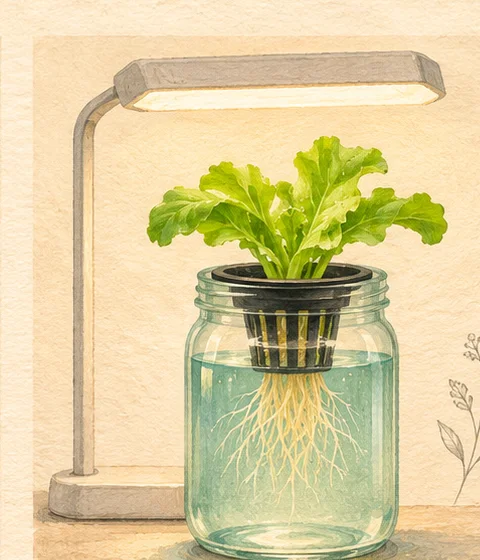
From simple passive jars to pump-fed systems, with clear pros, limits and setup guides.
Crops
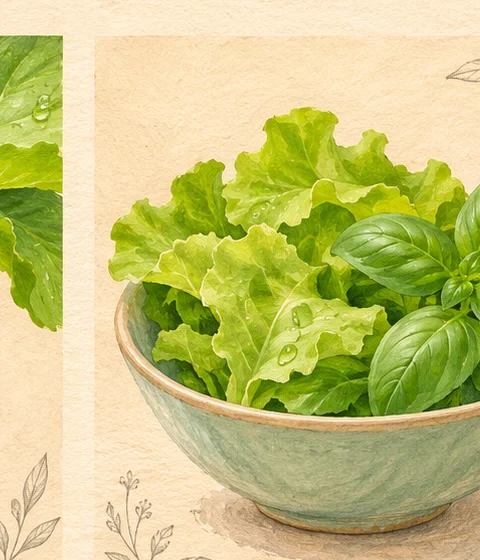
Grow basil, lettuce and other edible crops with practical notes on space and support.
Nutrients & water
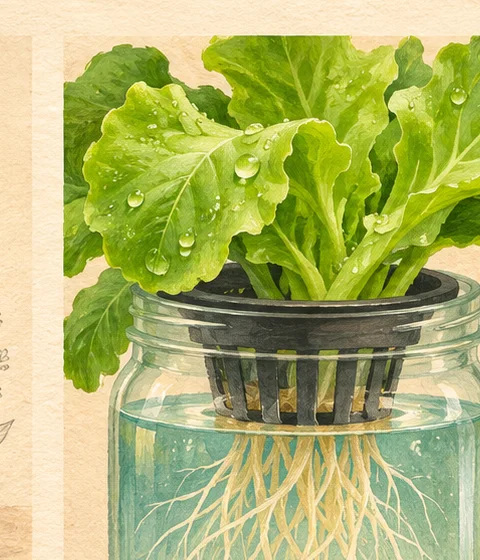
Understand feed, pH, EC and water quality without losing sight of the plant.
Troubleshooting
Start with what you can see, then check likely causes in a sensible order.
Water, roots, air and readings
Open a numbered note for the plain explanation, then follow the links when you need more detail.
Leaves and lightLeaves need enough light above them.
The plant still photosynthesises in the usual way, so the leaves need enough light. Start with the light maker’s hanging guidance, then watch the whole canopy: stretching suggests too little usable light; bleaching or curling can mean too much or too close.
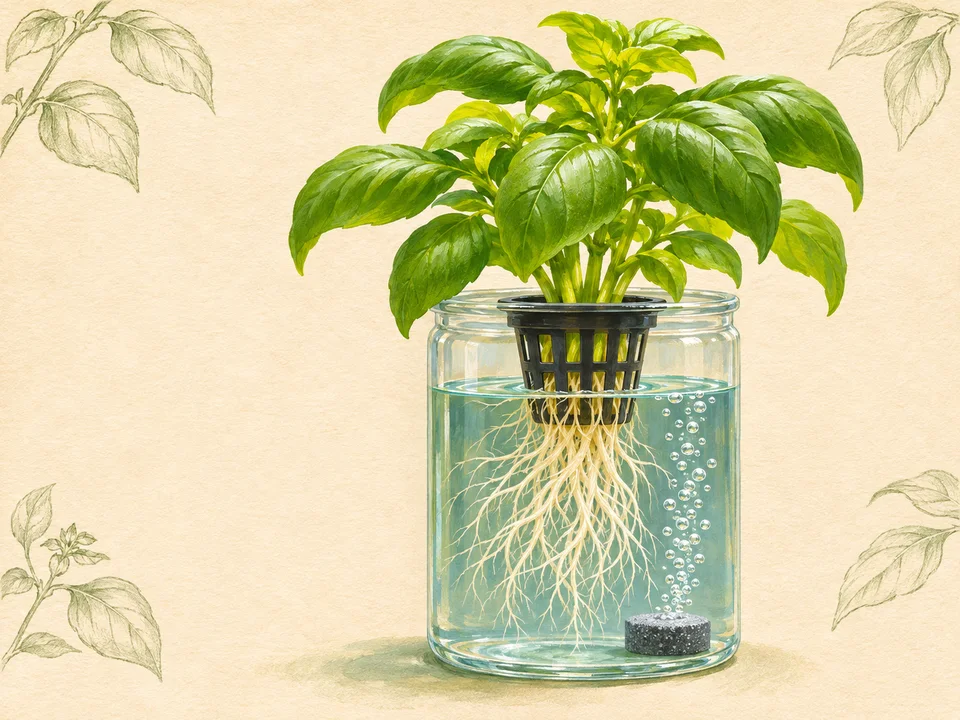
Net potHolds the plant above the water.
A slotted pot that supports a plug and lets roots reach the solution. The stem crown should sit above saturated material. Cover every gap around the net pot so light does not reach the water.
AirRoots need oxygen as well as water.
Roots can sit in solution only when oxygen is available. In a Kratky jar, the falling level leaves a moist air gap; in deep water culture, an air pump and air stone add circulation and oxygen, which makes the system dependent on continuous power.
RootsLook and feel, but don’t diagnose by colour.
Healthy new roots are usually firm. Brown colour alone is not a diagnosis, because some nutrients stain roots. Write down what you see and feel; concern rises when roots are slimy, fragile or foul-smelling and the plant wilts despite wet roots.
Water lineMark it; the level tells you how much the plant drinks.
Marking the full level reveals water use. In a Kratky jar, let the level fall rather than topping it back up to the crown, or the air roots can drown. In other systems, top up with water between planned solution changes.
Nutrient solutionWater carrying dissolved feed.
Water carries dissolved mineral nutrients to the roots. Use complete hydroponic feed rather than ordinary houseplant fertiliser, and let the product label set the dose. Never mix A and B concentrates together.
ReadingspH, EC and water temperature, if you measure them.
pH affects nutrient availability; EC estimates the total concentration of dissolved ions but cannot tell you which nutrient is missing. Warm solution holds less oxygen, so measure temperature at the warmest part of the day. Treat readings as trends beside what you see on the plant.